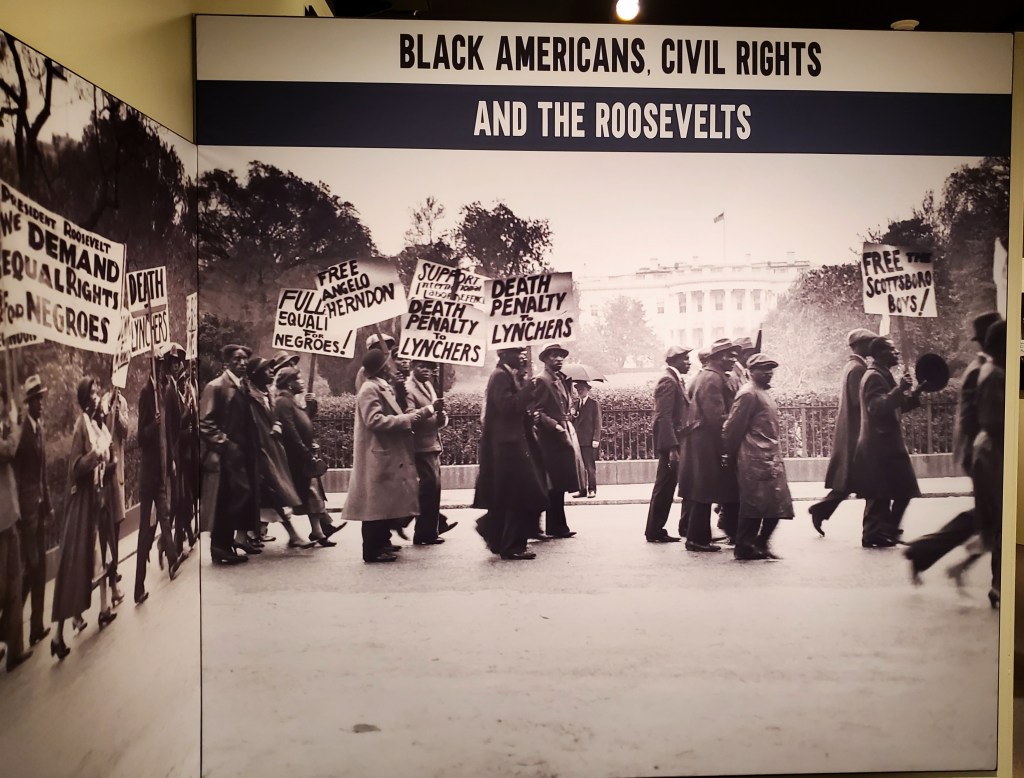
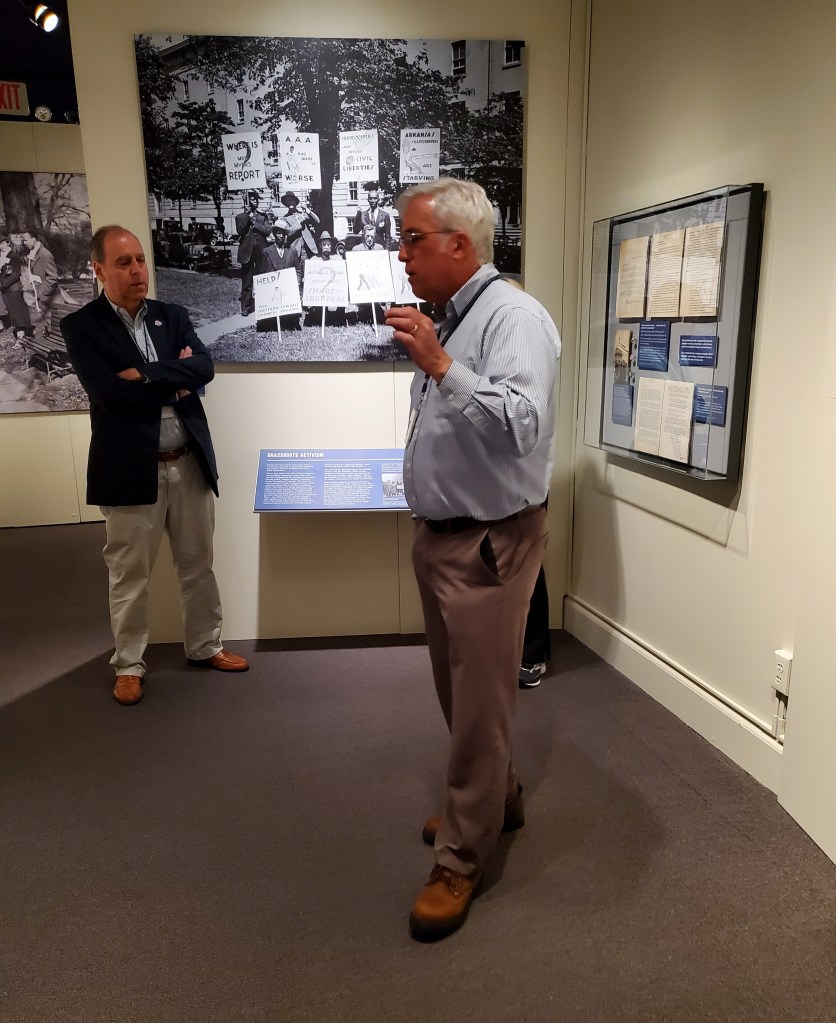
The FDR Museum Curator, Herman Eberhardt, gave the Docents a tour of the new Special Exhibit, BLACK AMERICANS, CIVIL RIGHTS, and THE ROOSEVELTS, 1932-1962.
The FDR Museum Curator, Herman Eberhardt
He said that they worked on this Exhibit for 3 years, planning, consulting with historians, and designing the Exhibit.
Consultants for this Exhibit
Mr. Eberhardt gave an incredibly detailed tour, and I was so impressed.
To summarize, the Roosevelts began the slow movement toward civil rights. Certainly not enough, but at least, a start.
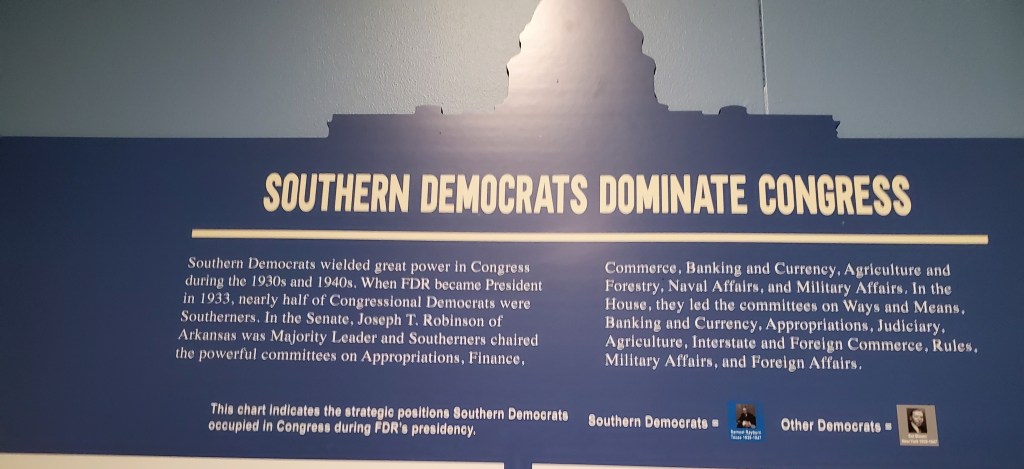
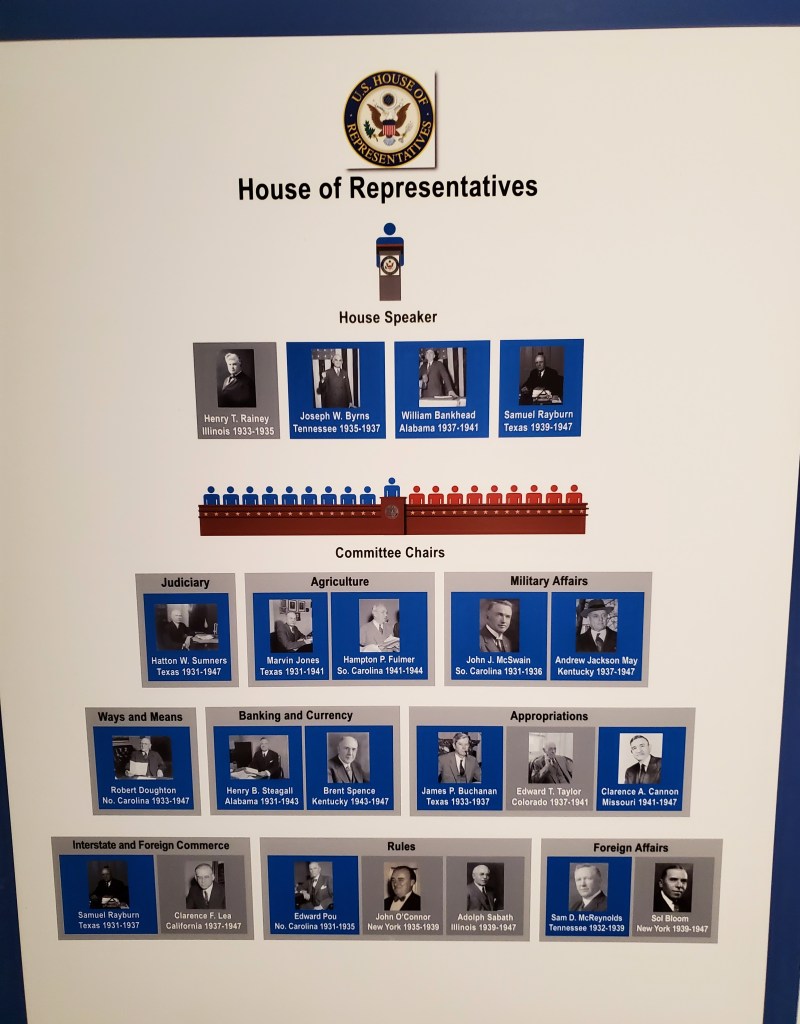
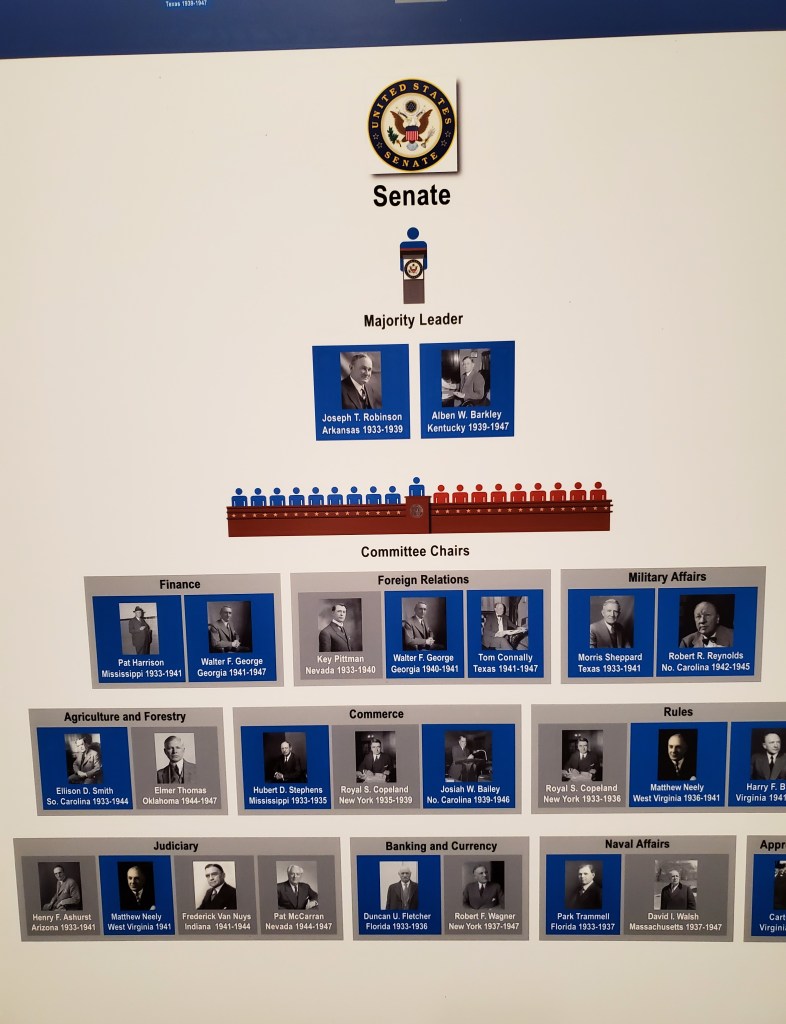
FDR, limited by the Southern Democrats who controlled the House and Senate and were completely racist, had to navigate a fine line if he were to be able to pass any legislation and maintain their support.
He always looked at a situation through the political lens that would do the most good for the most people
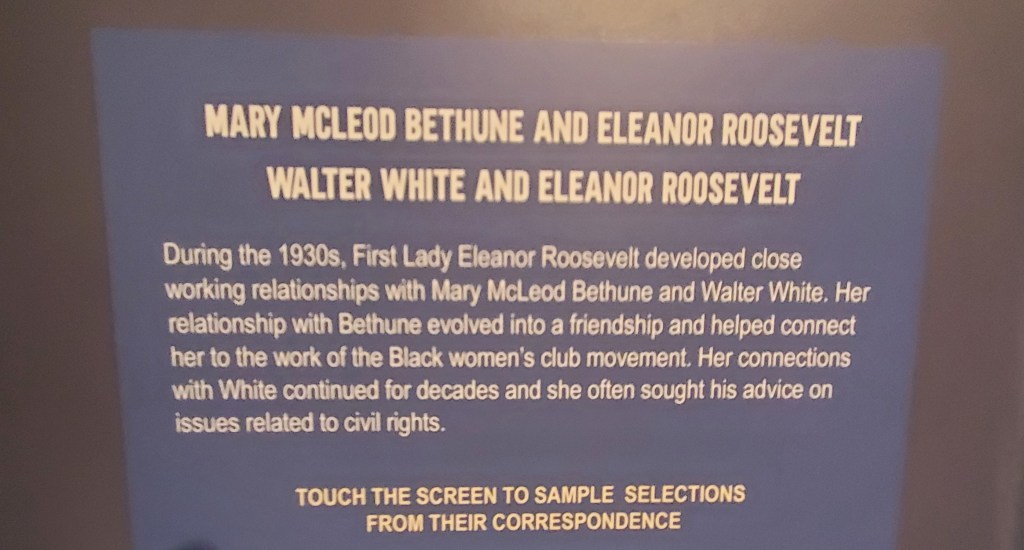
Eleanor was much more vocal and active in her support which steadily grew and continued until her death.
As someone once told me, Eleanor knew what SHOULD be done. FDR knew what COULD be done.
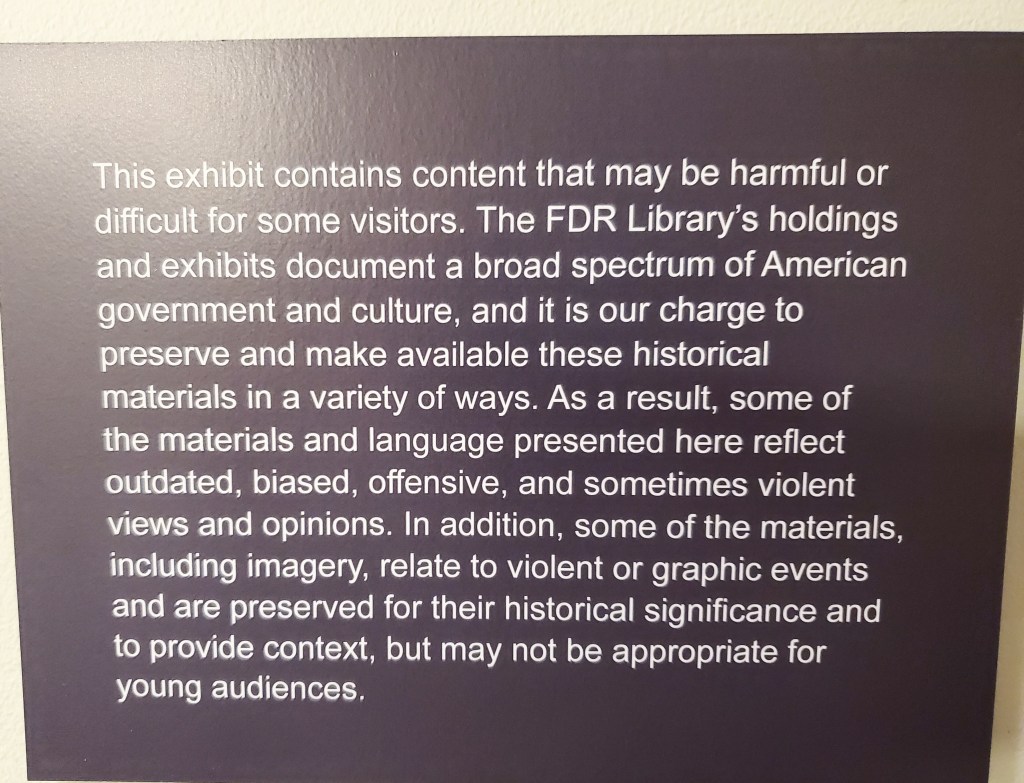
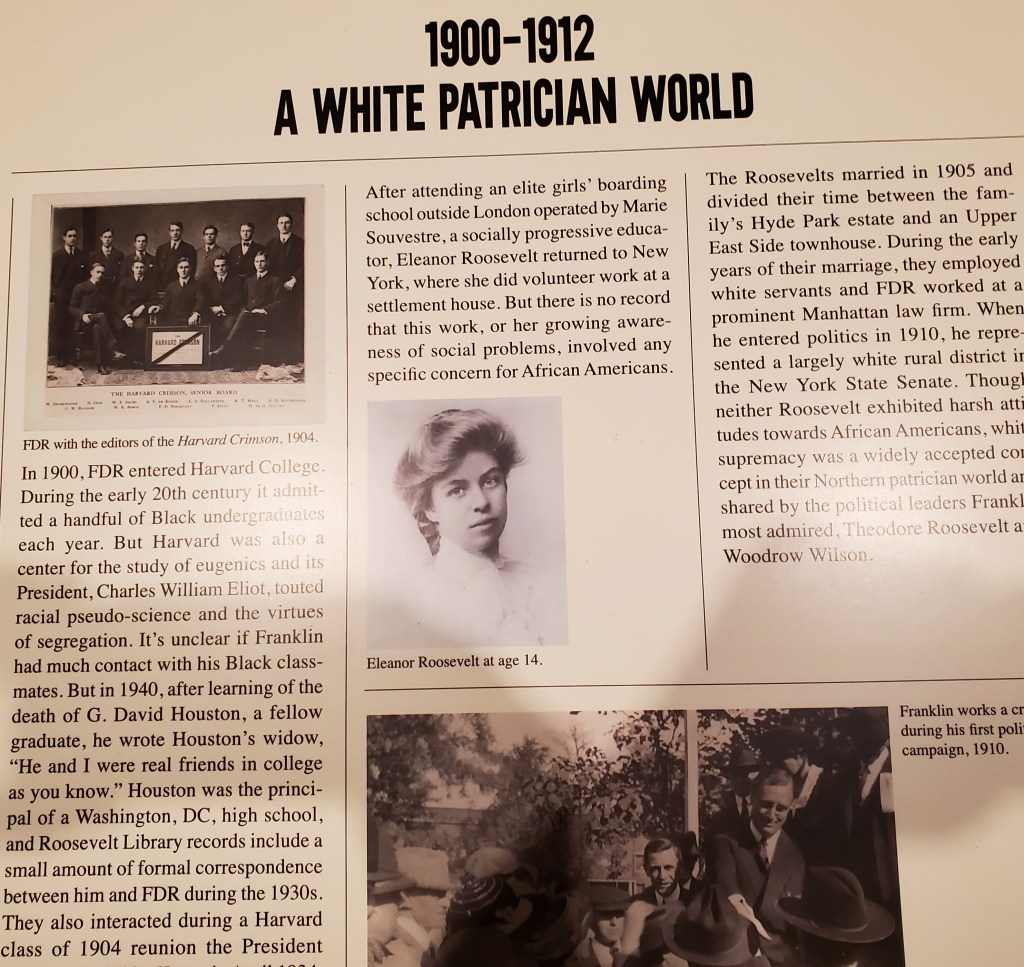
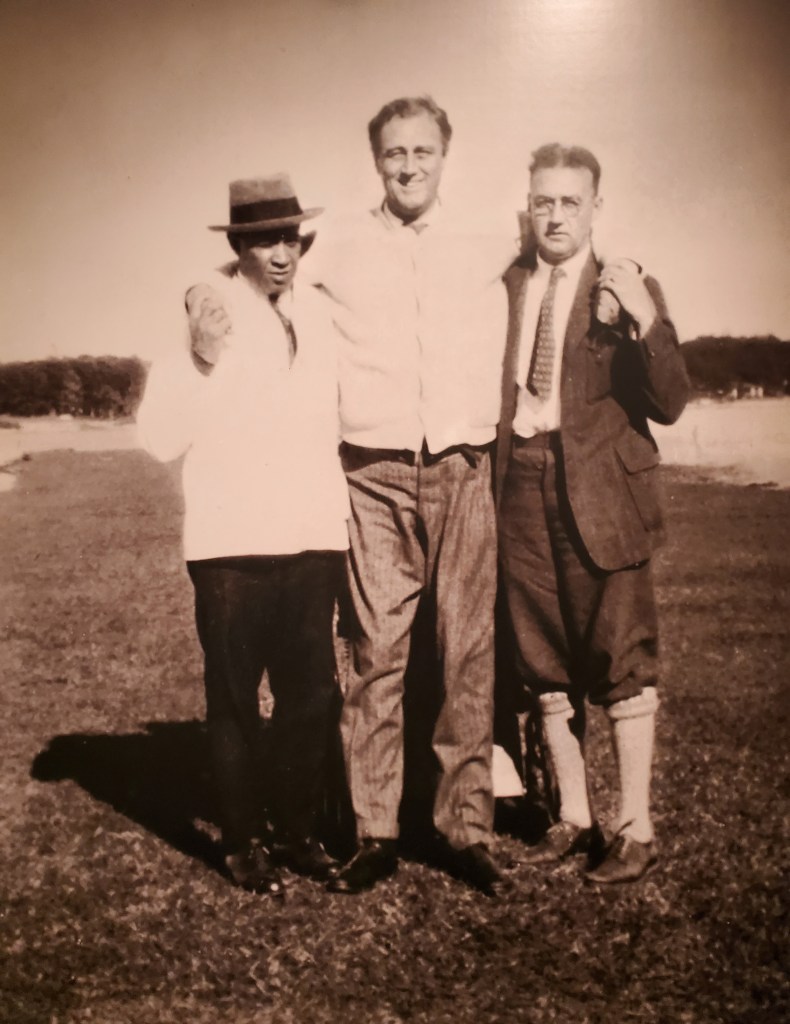
At the start of the exhibit, a note of warning that the exhibit may be disturbing and offensive due to content. The Roosevelts grew up in a society without people of color. It was just not something that concerned them. Once they moved to Washington in 1913, they did employ Blacks as servants. Once FDR was stricken with polio, he always had Black valets who aided him with his most personal activities, dressing, bathing, etc.In 1932, Blacks begin to consider leaving the Republican Party and look at the Democrats..maybeSouthern Democrats control both houses of Congress and were racist.Blue photos are Southern Democrats in HouseBlue photos are Southern Democrats in the Senate.
To pass any New Deal legislation, these Southerns had to vote, Aye. FDR had to “deal” with this situation.
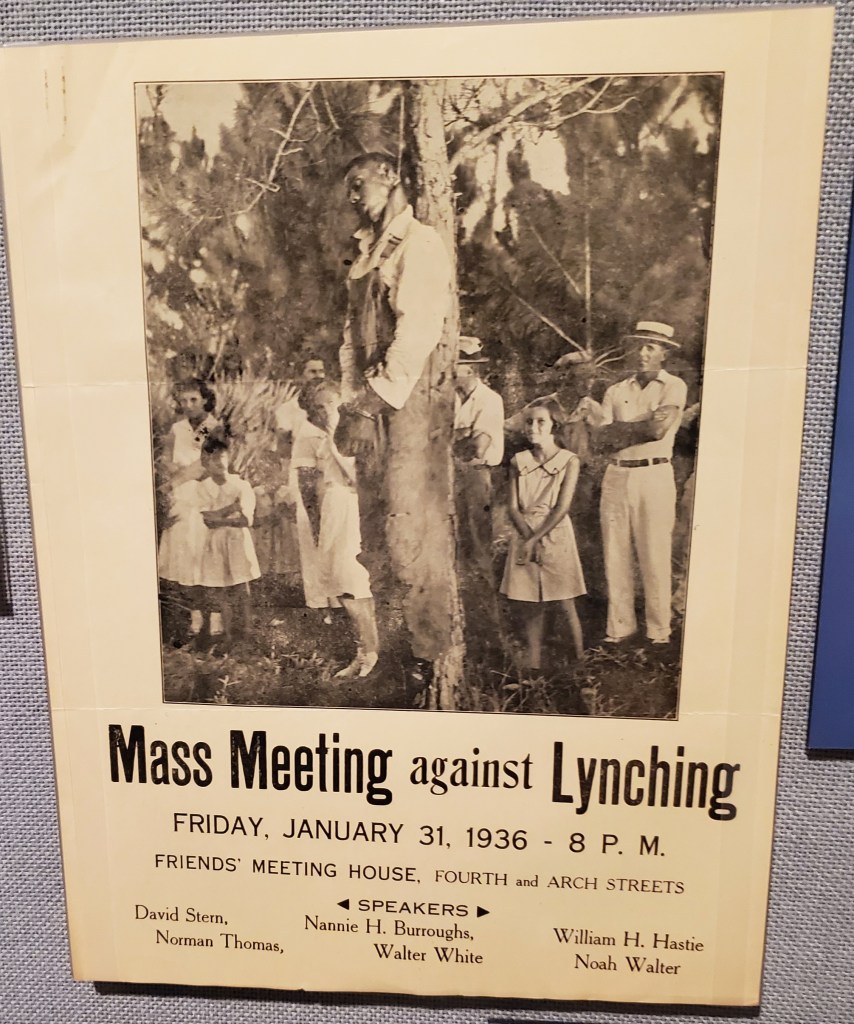
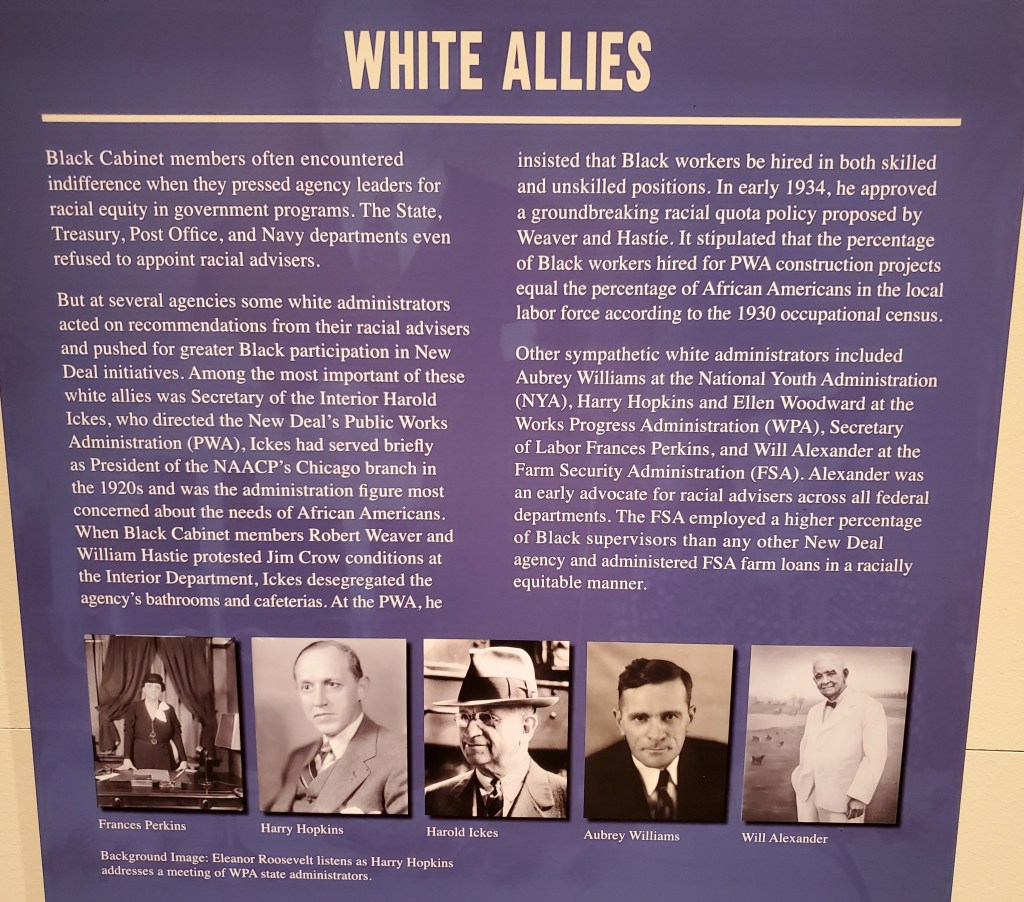
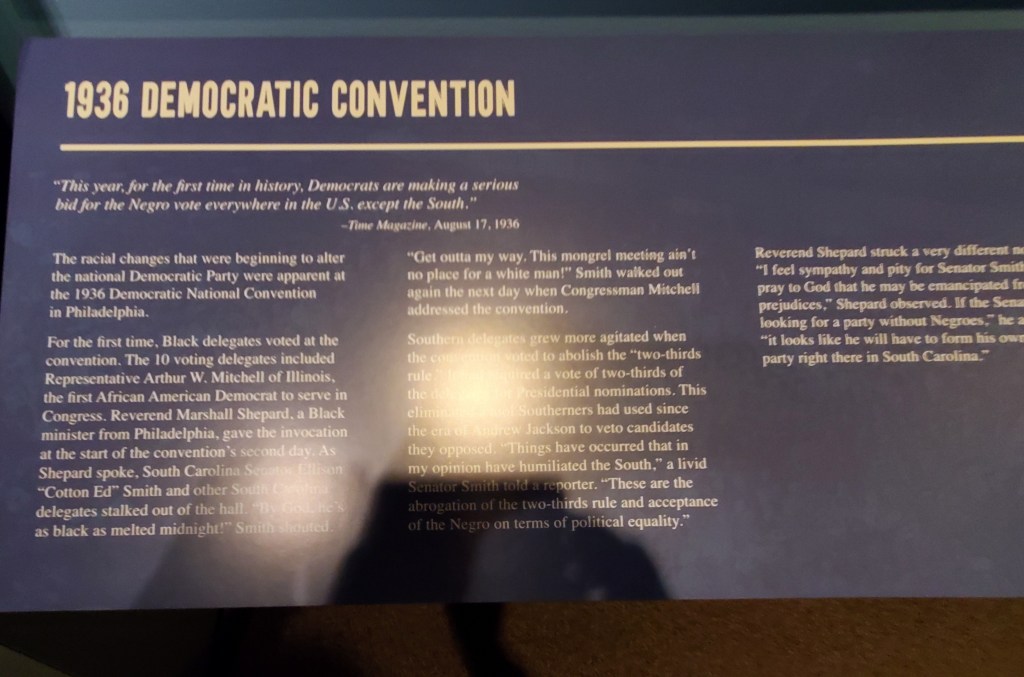
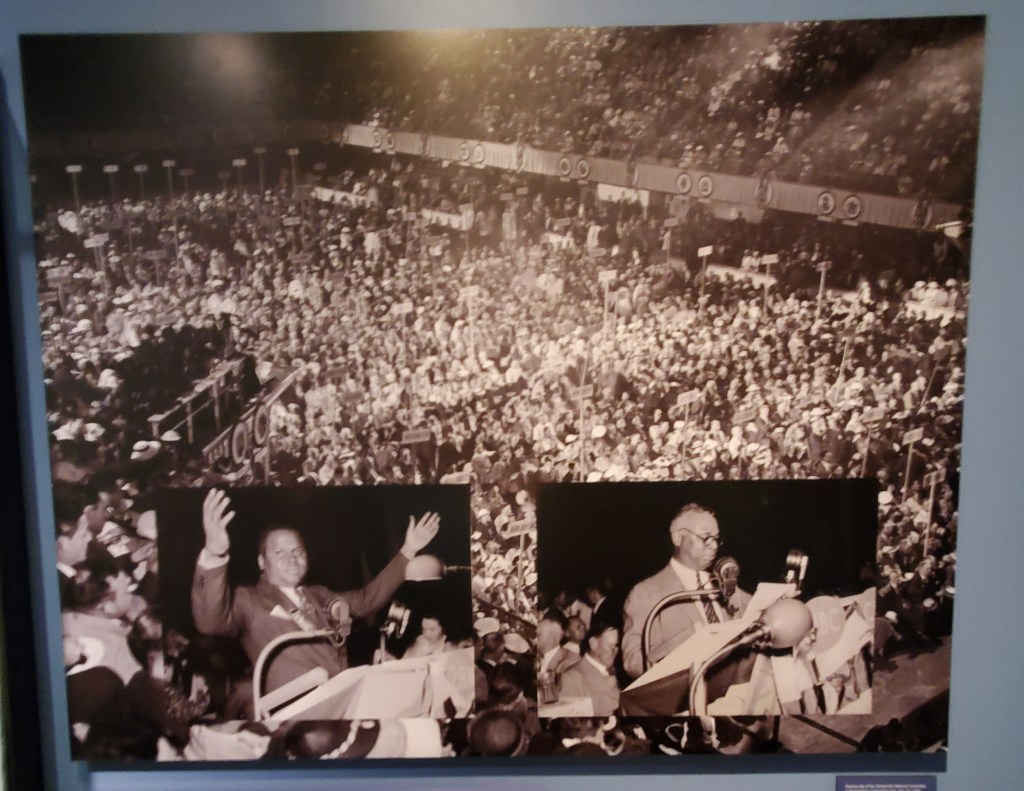
“If I come out for the anti-lynching bill now, [southern Democrats] will block every bill I ask Congress to pass to keep America from collapsing. I just can’t take the risk.” May 1934.. FDRSupporters of civil rights included 2 cabinet members, and close advisor, Frances Perkins, Harry Hopkins, and Harold IckesAt the 1936 Democratic Conelvention, 2 speakers were African-Americans. The Democratic Party was becoming their party. In 1932 there had been no Blacks.
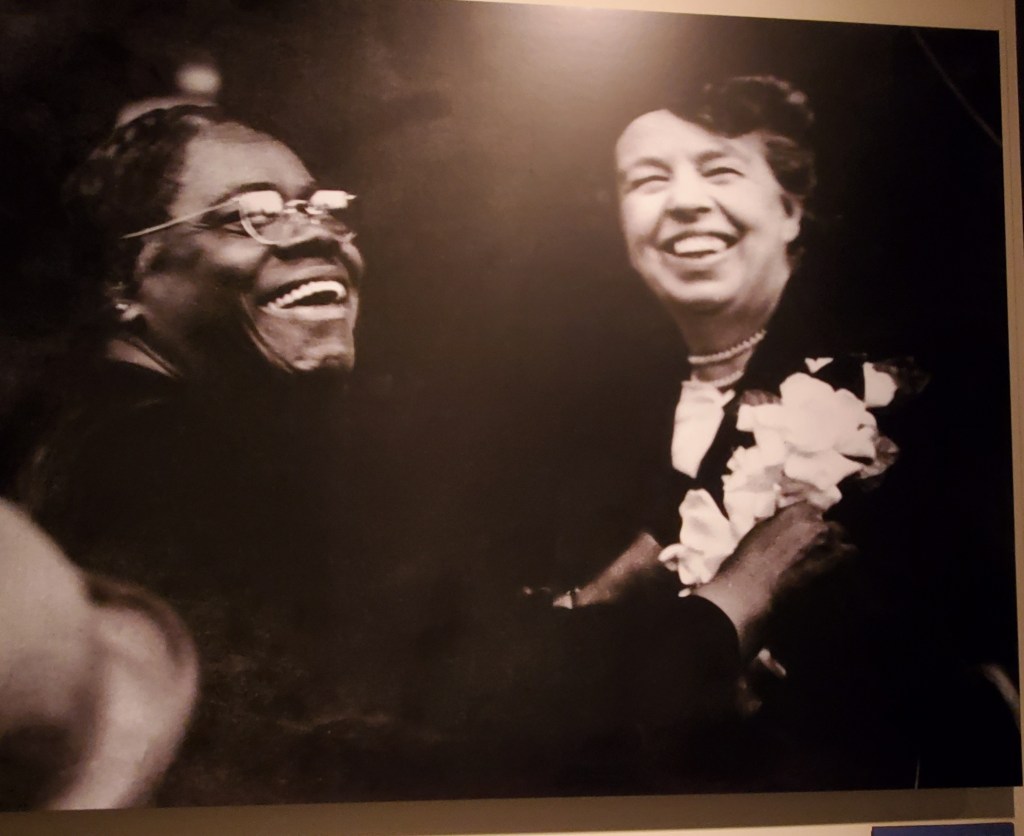
Eleanor continually pushed for more equal rights and worked with movement leaders in their struggle.
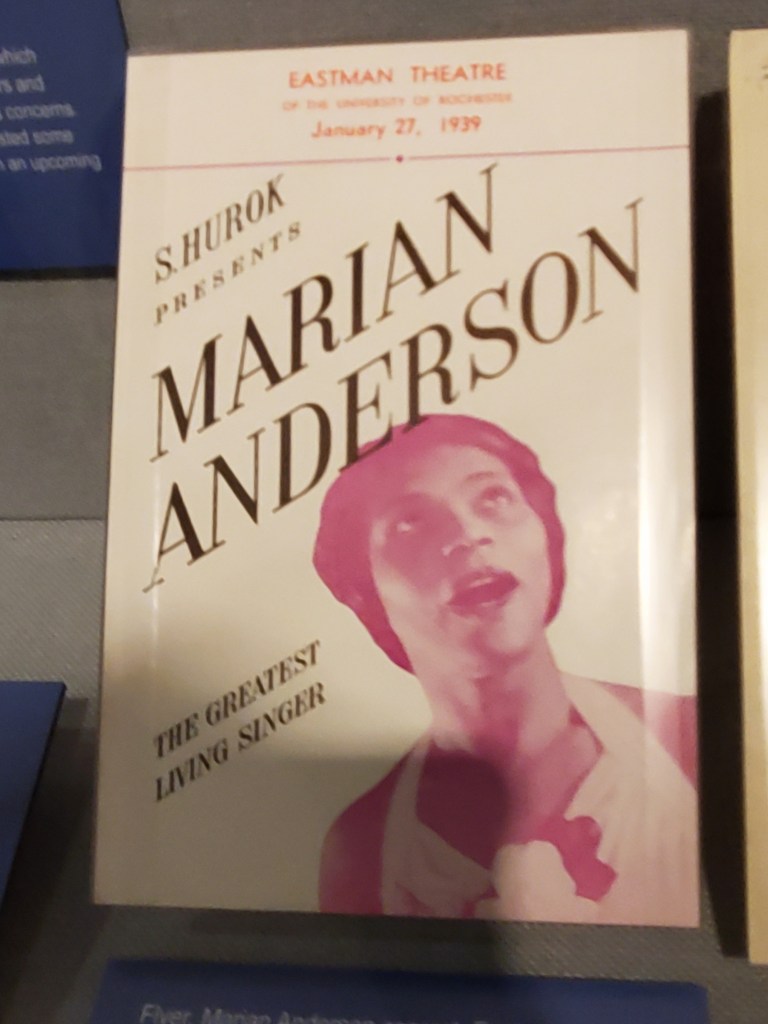
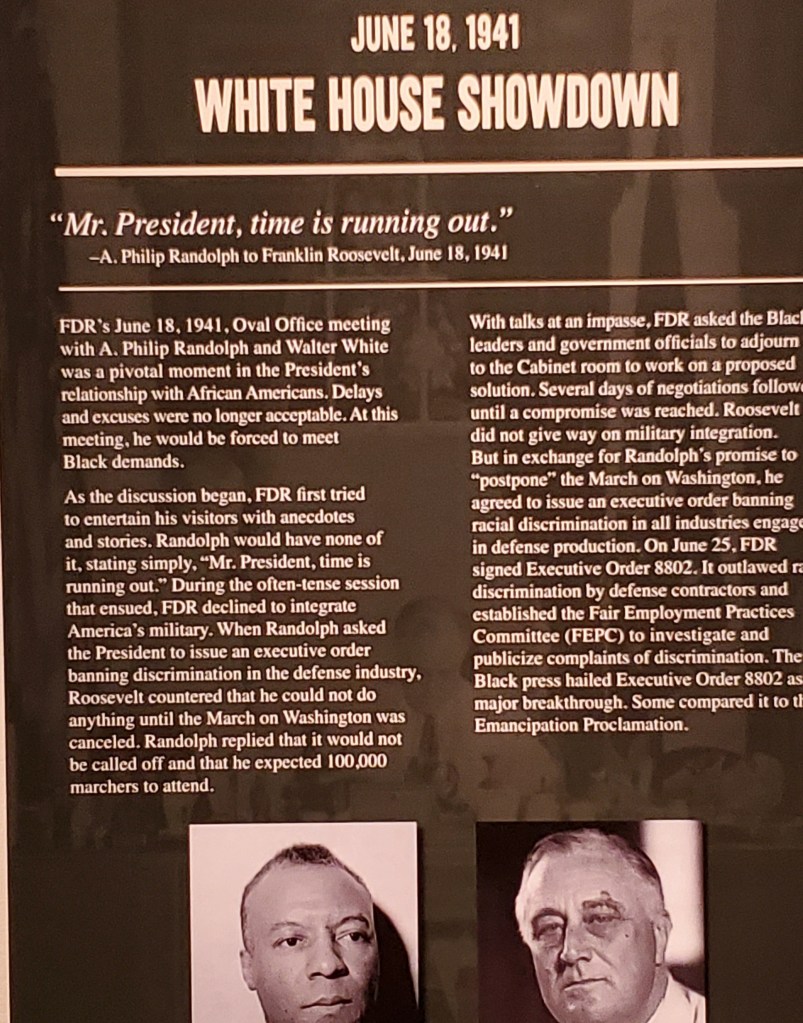
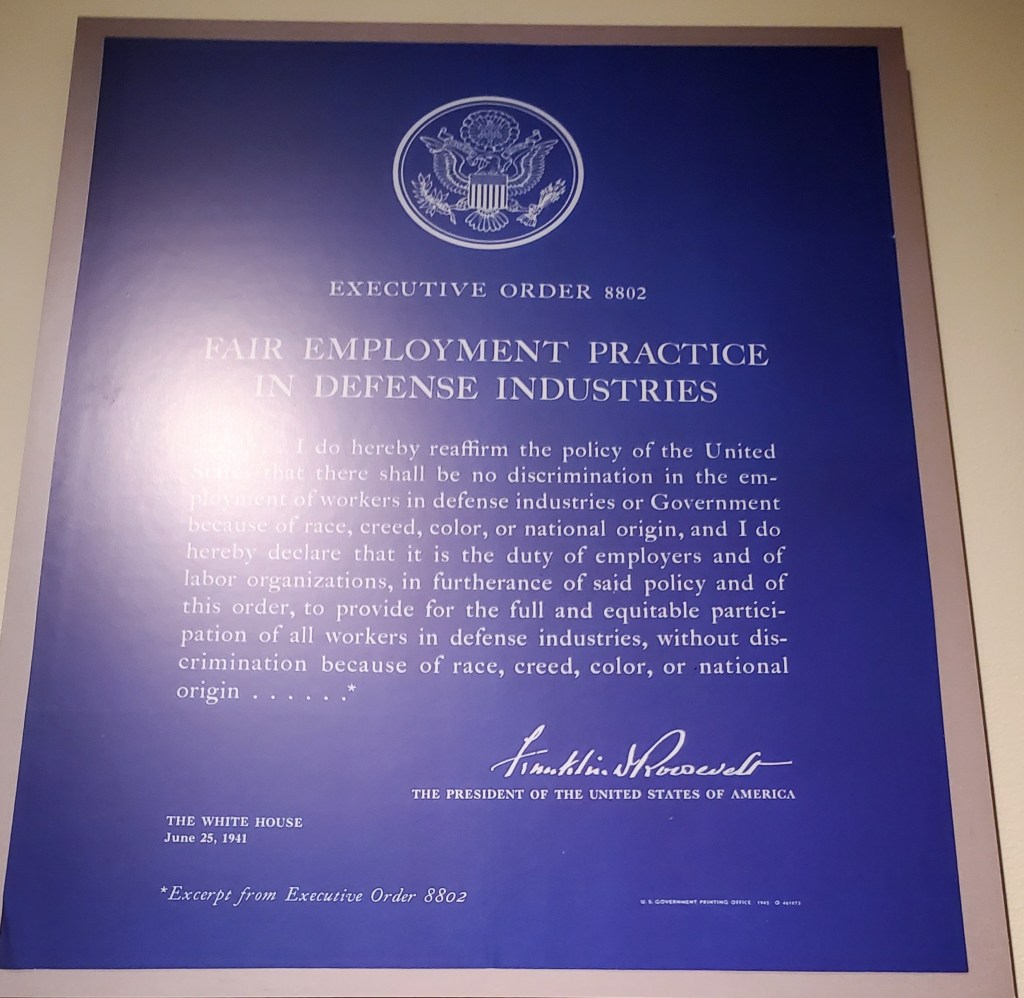
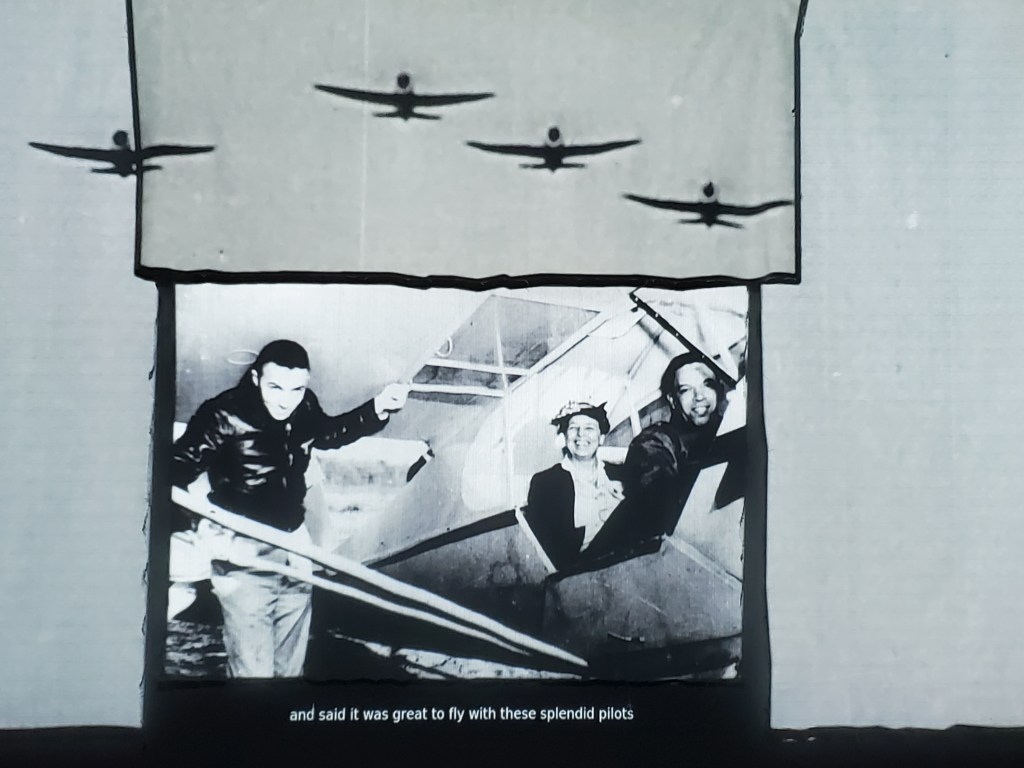
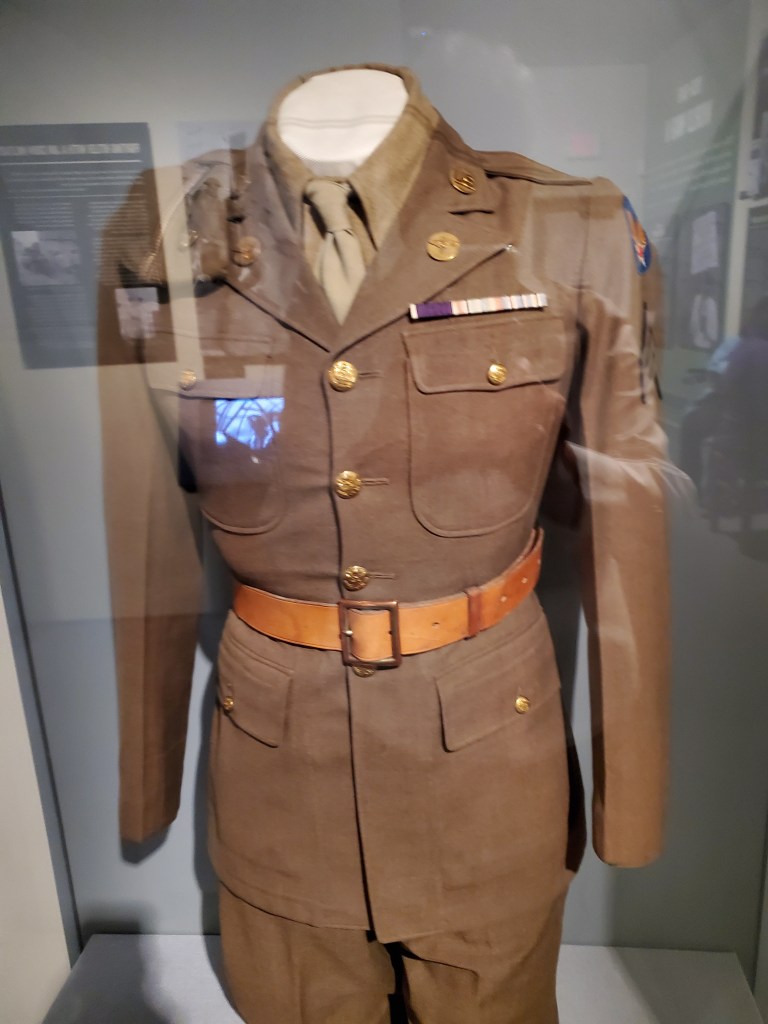
Marion Anderson sings at Lincoln Memorial Supported by Eleanor and Ickes. Eleanor resigned from DAR due to their refusal to allow Anderson to sing in a venue they controlled.June 1942..Threating a March on Washington, FDR meets with leaders White and Randolph. He agrees to support blacks working in the defense industries and signs Executive Order 8802. FDR does not agree to integrate the armed forces. The March was “postponed”, thus a comprimise.Executive Order 8802Fighting for Democracy and Equal RightsTuskegee Airmen and EleanorTuskegee Airman Uniform
Eleanor never gave up on fighting for equal rights until her death in 1962
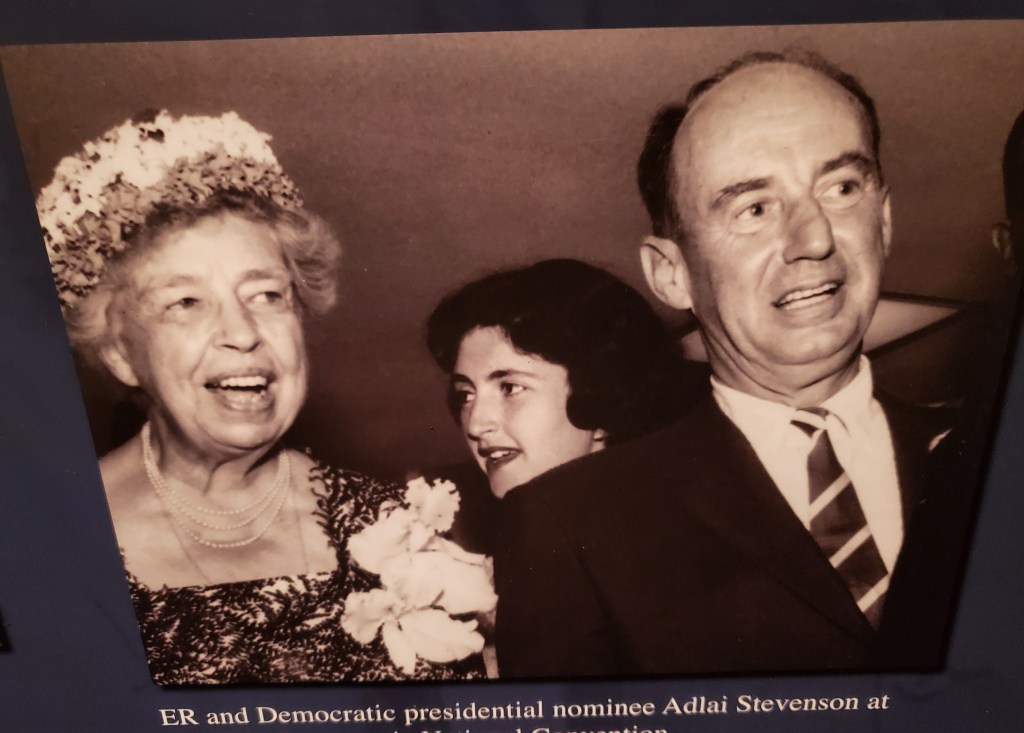
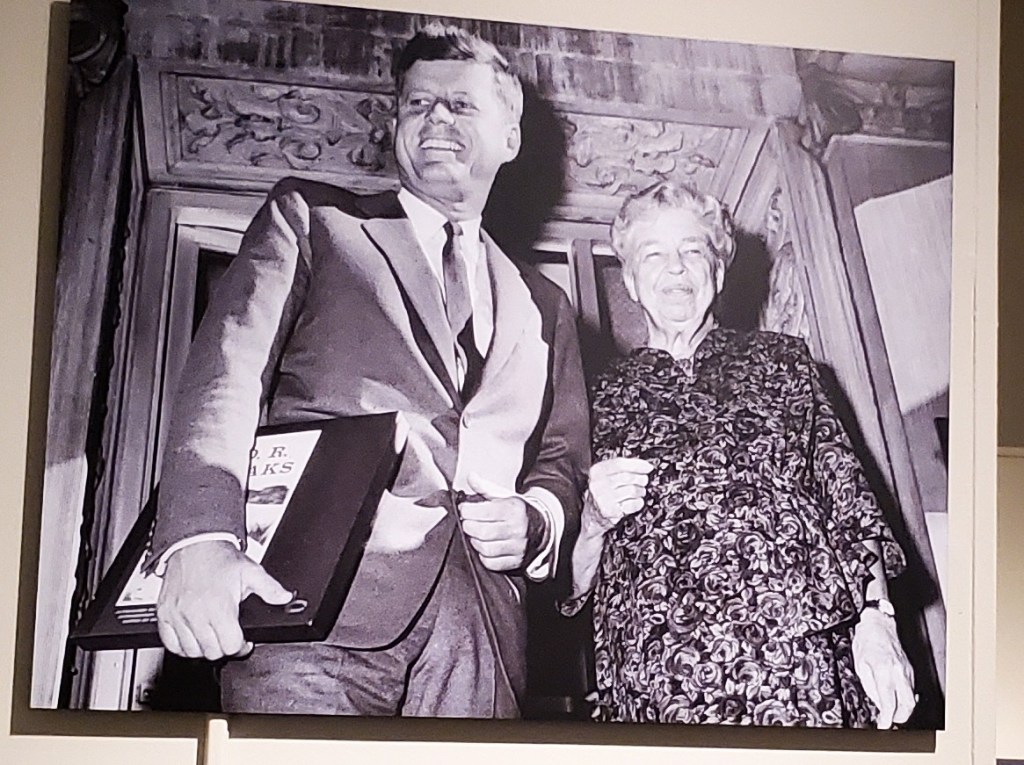
President Truman desegregates the military, 1948Supported Adlai Stevenson for PresidentSupported JFKFrom Exhibit Film.







 Rosy Ramblings
Very informative. Thank you
LikeLiked by 1 person
A remarkable exhibit..glad to share
LikeLike
Thanks, that’s really interesting stuff. Asta
LikeLike
It was fascinating and I learned a lot.
Those horrid southern Democrats.!
LikeLike
Looks so interesting and also balanced.
LikeLike
They did a good job showing both the successes, although small, and also the failure to do more.
LikeLike
They did a great job showing both the small limited successes and the disappointments
LikeLike